Academic Genealogy Tree: Felipe Cezar Salgado to the Scientific Revolution
Academic Genealogy Tree: Felipe Cezar Salgado to the Scientific Revolution
The Modern Era: High-Power Lasers and Plasma Physics
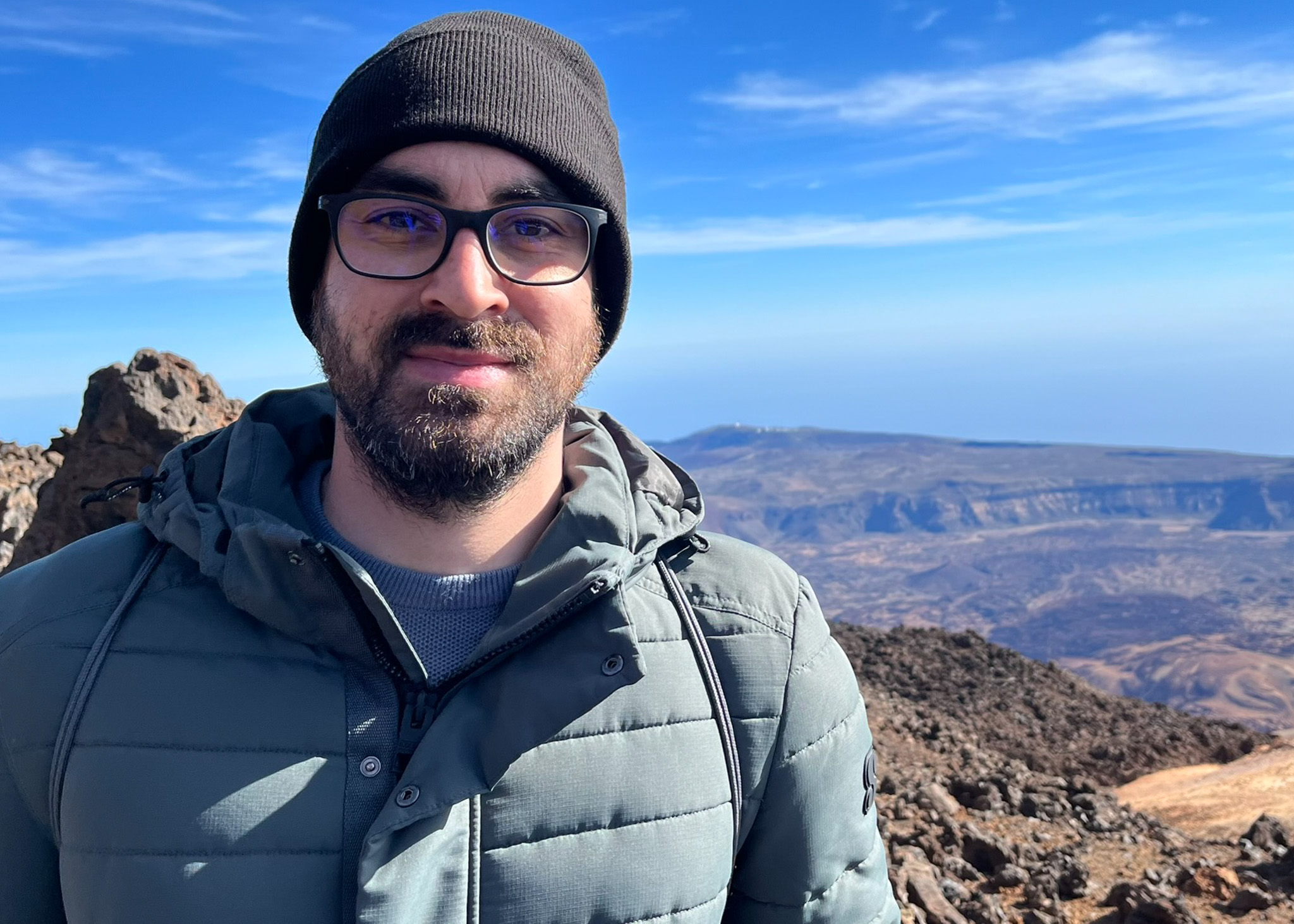
- Felipe Salgado
- Timeline: Completed PhD (Dr. rer. nat.) in 2023.
- Institute: Friedrich Schiller University Jena.
- Supervisors: Matt Zepf.
- Main research: High-intensity laser-plasma interactions, laser-driven particle acceleration as laser wakefield acceleration. Strong-field quantum electrodynamics (SF-QED) experiments (e.g., E-320 at FACET-II and FOR2783 at CALA).
- Source: Felipe Cezar Salgado, Design of a single-particle detection system for strong-field QED experiments, Dissertation, Friedrich-Schiller-Universität Jena (2023).
- Matt Zepf
- Timeline: Joined as a DPhil student in 1994; Completed PhD in 1997.
- Institute: University of Oxford.
- Supervisor: Justin Wark.
- Main research: High-intensity laser-plasma interactions, laser-driven particle acceleration, and the generation of secondary radiation sources (X-rays, protons) from plasmas.
- Source: C. N. Danson et al., A history of high-power laser research and development in the United Kingdom, High Power Laser Sci. Eng. 9, e18 (2021). (Notes Zepf as a DPhil student in Wark’s group).
- Justin Wark
- Timeline: Began undergraduate studies in 1979 (tutored by Paul Ewart); completed PhD in 1985 (Imperial College); joined the department as a Royal Society URF in 1988.
- Institute: University of Oxford / Imperial College London.
- Undergraduate Tutor: Paul Ewart.
- PhD Supervisor: Joseph D. Kilkenny.
- Main research: Warm dense matter, ultra-fast X-ray science, and shock-compressed matter diagnostics. Director of the Oxford Centre for High Energy Density Science (OxCHEDS).
- Source: C. N. Danson et al., A history of high-power laser research and development in the United Kingdom, High Power Laser Sci. Eng. 9, e18 (2021); and Justin S. Wark, Observations of the Rayleigh-Taylor instability in laser accelerated targets, Ph.D. Thesis, University of London (Imperial College) (1985). (Explicitly notes J. D. Kilkenny as his supervisor).
- Joseph D. Kilkenny
- Timeline: Completed PhD in 1972.
- Institute: Imperial College London.
- PhD Supervisor: Robert Latham.
- Main research: Inertial confinement fusion (ICF) and high-speed plasma instrumentation (e.g., x-ray streak cameras). Program Leader for ICF at Lawrence Livermore National Laboratory (LLNL).
- Source: Joseph D. Kilkenny, Measurement of the ion energy in a theta pinch, Ph.D. Thesis, University of London (Imperial College) (1972). (Explicitly notes Dr. R. Latham as his supervisor in the acknowledgements).
- Robert Latham
- Timeline: Completed PhD in 1946 (Research Fellow at Queens’ College 1945–1948).
- Institute: University of Cambridge (Cavendish Laboratory) / Imperial College London.
- PhD Supervisor / Mentor: George Paget Thomson. (Note: Latham began his research at Cambridge, but his post-war academic and research lineage is mapped via Sir George Paget Thomson, who recruited him for early thermonuclear fusion research at Imperial College in 1948).
- Main research: Plasma physics, gas discharge, and early thermonuclear fusion research (Z-pinch). Worked on microwave radar valves during World War II.
- Source: Robert Latham, Physics Tree (Accessed 2026); and Queens’ College Record 1995, University of Cambridge.
The Late 19th & Early 20th Century: Nuclear Physics and Electron Discovery
- George Paget Thomson
- Timeline: Nobel Prize in Physics in 1937 (for discovering wave properties of electron by diffraction); Professor of Physics at Imperial College London (1930–1952); Master of Corpus Christi College, Cambridge (1952–1962).
- Institute: University of Cambridge (Cavendish Laboratory) / Imperial College London.
- Supervisor: J. J. Thomson.
- Main research: Discovered electron diffraction, worked on neutron physics, and chaired the MAUD Committee in WWII. Co-founded early thermonuclear fusion research at Imperial College.
- Source: George Paget Thomson Biography, Wikipedia (Accessed 2026); and George Paget Thomson, Physics Tree (Accessed 2026).
- J. J. Thomson
- Timeline: M.A. awarded 1883; Nobel Prize in Physics in 1906.
- Institute: University of Cambridge (Cavendish Laboratory).
- Supervisor: Lord Rayleigh.
- Main research: Discovered the electron and isotopes, and pioneered the mass spectrometer.
- Source: Joseph John Thomson, Mathematics Genealogy Project (Accessed 2026); and J. J. Thomson, Physics Tree (Accessed 2026).
The Cambridge Mathematical Coaches (18th & 19th Century)
- Lord Rayleigh
- Timeline: M.A. awarded in 1868; Nobel Prize in Physics in 1904.
- Institute: University of Cambridge.
- Tutors: Edward Routh, George Gabriel Stokes, and James Clerk Maxwell.
- Main research: Formulated the theory of acoustic scattering (“Rayleigh scattering”), co-discovered Argon.
- Source: John William Strutt (Lord Rayleigh), Mathematics Genealogy Project (Accessed 2026).
- Edward Routh
- Timeline: Graduated M.A. in 1857.
- Institute: University of Cambridge.
- Supervisors: William Hopkins, Isaac Todhunter, and Augustus De Morgan.
- Main research: Cambridge’s greatest “Mathematical Coach”. Formulated the Routh-Hurwitz theorem.
- Source: Edward John Routh, Mathematics Genealogy Project (Accessed 2026).
- George Gabriel Stokes
- Timeline: Graduated BA in 1841.
- Institute: University of Cambridge.
- Supervisor: William Hopkins.
- Main research: Co-formulated the Navier-Stokes equations governing fluid dynamics.
- Source: George Gabriel Stokes, Mathematics Genealogy Project (Accessed 2026).
- William Hopkins
- Timeline: Graduated M.A. in 1830.
- Institute: University of Cambridge.
- Supervisor: Adam Sedgwick.
- Main research: Famed “Senior-Wrangler Maker”. Pioneer of physical geology.
- Source: William Hopkins, Mathematics Genealogy Project (Accessed 2026).
- Adam Sedgwick
- Timeline: Graduated M.A. in 1811.
- Institute: University of Cambridge.
- Supervisors: Thomas Jones and John Dawson.
- Main research: Founder of modern geology. Proposed the Cambrian and Devonian periods.
- Source: Adam Sedgwick, Mathematics Genealogy Project (Accessed 2026).
- Thomas Jones
- Timeline: Graduated M.A. in 1782 (B.A. in 1779).
- Institute: University of Cambridge (Trinity College).
- Supervisor: Thomas Postlethwaite.
- Main research: Head Tutor at Trinity College, Cambridge. Famed for his lectures on mathematics and his influence on many Cambridge scholars including Adam Sedgwick.
- Source: Thomas Jones, Mathematics Genealogy Project (Accessed 2026).
- Thomas Postlethwaite
- Timeline: Graduated M.A. in 1756 (B.A. in 1753).
- Institute: University of Cambridge (Trinity College).
- Supervisor: Stephen Whisson.
- Main research: Master of Trinity College, Cambridge.
- Source: Thomas Postlethwaite, Mathematics Genealogy Project (Accessed 2026).
- Stephen Whisson
- Timeline: Graduated M.A. in 1742 (B.A. in 1738).
- Institute: University of Cambridge (Trinity College).
- Supervisor: Walter Taylor.
- Main research: Tutor and Senior Fellow at Trinity College, Cambridge. University Librarian.
- Source: Stephen Whisson, Mathematics Genealogy Project (Accessed 2026).
- Walter Taylor
- Timeline: Graduated M.A. in 1723.
- Institute: University of Cambridge (Trinity College).
- Supervisor: Robert Smith.
- Main research: Regius Professor of Greek and Tutor at Trinity College, Cambridge.
- Source: Walter Taylor, Mathematics Genealogy Project (Accessed 2026).
The Enlightenment and Scientific Revolution (16th & 17th Century)
(Note: The sources in this section are mapped to the Mathematics Genealogy Project and MacTutor Archive)
- Robert Smith
- Timeline: Graduated M.A. in 1715 (B.A. in 1711).
- Institute: University of Cambridge.
- Supervisor: Roger Cotes.
- Main research: Published A Compleat System of Opticks (1738). Succeeded Cotes as Plumian Professor. Founded the Smith’s Prizes.
- Source: Robert Smith, Mathematics Genealogy Project (Accessed 2026); and Robert Smith Biography, Wikipedia (Accessed 2026).
- Roger Cotes
- Timeline: Graduated M.A. in 1706 (B.A. in 1702).
- Institute: University of Cambridge.
- Supervisor: Sir Isaac Newton.
- Main research: Collaborated with Newton to edit the second edition of the Principia. First Plumian Professor.
- Source: Roger Cotes, Mathematics Genealogy Project (Accessed 2026); and Roger Cotes Biography, MacTutor History of Mathematics Archive (Accessed 2026).
- Sir Isaac Newton
- Timeline: Graduated M.A. in 1668 (B.A. in 1665).
- Institute: University of Cambridge.
- Supervisors/Tutors: Isaac Barrow and Benjamin Pulleyn.
- Main research: Formulated the laws of motion and universal gravitation. Lucasian Professor.
- Source: Isaac Newton, Mathematics Genealogy Project (Accessed 2026); and Isaac Newton Biography, MacTutor History of Mathematics Archive (Accessed 2026).
- Isaac Barrow
- Timeline: Graduated M.A. in 1652 (B.A. in 1648).
- Institute: University of Cambridge / Independent study in Italy.
- Mentor: Vincenzo Viviani.
- Main research: Pioneer of calculus. First to state the Fundamental Theorem of Calculus. First Lucasian Professor.
- Source: Isaac Barrow, Mathematics Genealogy Project (Accessed 2026); and Isaac Barrow Biography, MacTutor History of Mathematics Archive (Accessed 2026).
The Italian Renaissance
- Vincenzo Viviani
- Timeline: Became a pupil to Galileo in 1639.
- Institute: Court of the Grand Duke of Tuscany.
- Supervisor: Galileo Galilei.
- Main research: First to accurately determine the speed of sound. Reconstructed Apollonius’s lost work De locis planis. Served as Galileo’s last pupil and biographer.
- Source: Vincenzo Viviani, Mathematics Genealogy Project (Accessed 2026); and Vincenzo Viviani Biography, MacTutor History of Mathematics Archive (Accessed 2026).
- Galileo Galilei
- Timeline: Student starting in 1581.
- Institute: University of Pisa.
- Supervisor: Ostilio Ricci.
- Main research: Championed heliocentrism, discovered the four largest moons of Jupiter, formulated the basic law of falling bodies.
- Source: Galileo Galilei, Mathematics Genealogy Project (Accessed 2026); and Galileo Galilei Biography, MacTutor History of Mathematics Archive (Accessed 2026).
- Ostilio Ricci
- Timeline: Court Mathematician in the late 1500s.
- Institute: Court of Francesco I de’ Medici.
- Supervisor: Nicolò Tartaglia.
- Main research: Mathematician and military engineer. Convinced Galileo’s father to let him study mathematics.
- Source: Ostilio Ricci, Mathematics Genealogy Project (Accessed 2026); and Ostilio Ricci Biography, Wikipedia (Accessed 2026).
- Nicolò Tartaglia
- Timeline: Active throughout the early to mid-1500s (Died 1557).
- Institute: Venice / Verona.
- Main research: Discovered the general algebraic solution for cubic equations. Published the first Italian translations of Euclid and Archimedes.
- Source: Nicolo Tartaglia, Mathematics Genealogy Project (Accessed 2026); and Nicolo Tartaglia Biography, MacTutor History of Mathematics Archive (Accessed 2026).